How Tymira Health Streamlines Multi-Location Clinic Operations

Multi-location healthcare groups face a coordination problem that single-site practices never encounter: keeping schedules, staff, and records consistent across every location. We built Tymira Health to solve exactly that.
One System Across Every Location
Instead of juggling separate calendars and spreadsheets per site, Tymira Health centralizes scheduling so staff at any location can see availability everywhere.
This reduces double-booking and gives administrators a single source of truth.
Staff Allocation Without the Guesswork
Allocations across departments and locations are visible in one dashboard, making it easier to cover gaps caused by leave or high demand.
Managers can shift staff between sites in minutes rather than coordinating by phone or email.
Reporting That Reflects the Whole Practice
Leadership teams get consolidated reporting on appointments, utilization, and request volume across all locations.
That visibility supports better decisions about where to add capacity or adjust staffing.
Tymira Health Point of View
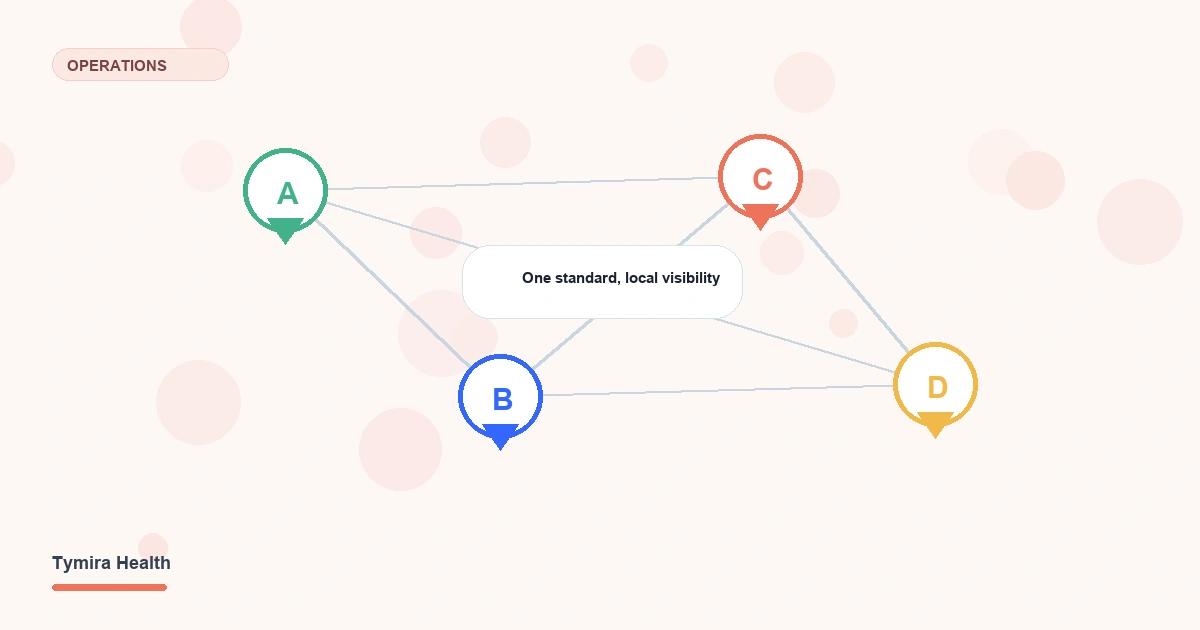
Multi-location operations need shared standards with local flexibility. Tymira Health should help leaders compare sites without forcing every clinic to work exactly the same way.
Implementation Playbook
Start by standardizing location setup, provider availability, services, appointment types, payment rules, and reporting definitions. Then allow each location to manage local schedules and staffing within those guardrails.
Leadership should review exceptions weekly: overloaded providers, underused rooms, delayed documentation, unresolved balances, and locations with rising cancellation or no-show patterns.
Metrics to Track
Track utilization by location, appointment mix, revenue by branch, provider capacity, patient wait time, unresolved tasks, cancellation patterns, and reporting completeness.
People Also Ask: FAQs
Should every location use the same workflows? Core rules should be consistent, but teams may need location-specific services, schedules, staffing, and pricing.
What breaks first as clinics add locations? Visibility usually breaks first. Leaders lose a real-time view of capacity, performance, patient flow, and revenue leakage.
How should leadership compare branches fairly? Use shared definitions for appointment types, visit status, provider capacity, collections, and operational exceptions.
Sharp Conclusion
Multi-location growth works when the organization can see the whole network without losing the details that make each clinic work.