Healthcare Compliance, Security, and Reporting Guide

This guide helps clinics understand how access control, audit trails, consent, cybersecurity, incident response, data governance, quality reporting, and executive dashboards protect care and business continuity.
Why This Matters
This guide helps clinics understand how access control, audit trails, consent, cybersecurity, incident response, data governance, quality reporting, and executive dashboards protect care and business continuity.
This guide is for clinic owners, compliance leads, operations managers, security reviewers, product managers, and developers.
Tymira Health approaches this work as an operating model, not a collection of disconnected screens. The goal is to help clinic teams see what needs attention, understand who owns the next step, and reduce preventable delays across the patient journey.
Tymira Health Point of View
At Tymira Health, we make compliance practical. The message is not that clinics need more policy documents. The core idea is that good software makes safe behavior easier: the right access, the right log, the right consent state, the right report, and the right owner when something needs attention.
What This Cluster Covers
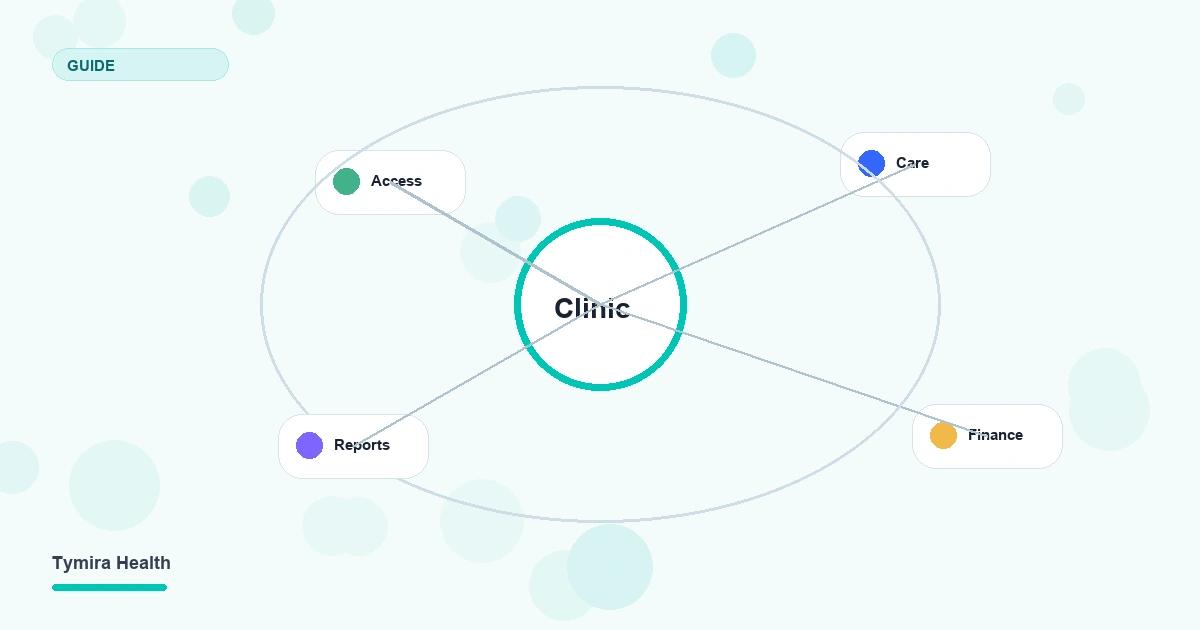
This pillar connects the main workflow questions clinics should answer as they modernize practice management.
- Role-Based Access Control in Healthcare Practice Management
- Audit Trails for Clinics: What Should Be Logged and Why
- Consent Management for Clinics: From Intake to Reporting
- Cybersecurity Basics Every Clinic Operator Should Understand
- Incident Response for Clinics: What to Do When Something Goes Wrong
- Data Governance for Healthcare Practices: Ownership, Quality, and Trust
- Quality Reporting for Clinics: How to Turn Workflow Data Into Improvement
- Executive Reporting for Clinic Owners: Metrics That Matter
Product Experience Principles
Tymira Health product design should prioritize role permissions, audit logs, consent status, incident checklists, dashboard filters, and weekly reporting views. Keep the language operational and Teams should avoid legal overclaiming.
Next Step
Review Tymira360 compliance, audit, and reporting workflows.
Clinic Scenario: Where the Workflow Usually Breaks
Compliance breaks down when access, consent, audit trails, incident response, and reporting live in separate places. Staff may be working hard, but leadership still cannot see whether sensitive steps are being handled consistently.
Tymira Health treats compliance as a daily workflow discipline, not a folder of policies that only gets opened during an audit.
Implementation Playbook
Define sensitive workflow areas, map who needs access, record which events require audit trails, and review exception handling before automating any compliance process.
Start with role-based permissions and visible review queues. Then add reporting that helps leaders see unresolved risks without exposing unnecessary patient detail.
Metrics to Track
Track unresolved access exceptions, overdue reviews, consent gaps, failed handoffs, audit-log coverage, incident response time, and the number of reports that require manual cleanup.
People Also Ask: FAQs
Should every staff member see every record? No. Access should follow role, responsibility, and minimum-necessary principles.
What should leadership review first? Start with access controls, audit events, consent capture, incident workflows, and reports that expose sensitive information.
Is software alone enough for compliance? No. Technology supports policy, training, review, documentation, and accountability.
Sharp Conclusion
Compliance becomes easier when the clinic can see the work as it happens. Tymira Health should help teams protect patients, prove accountability, and keep operations moving.